 Home
Research 1
Research 2
Applications
Conclusions
Management
Contact Us
Home
Research 1
Research 2
Applications
Conclusions
Management
Contact Us

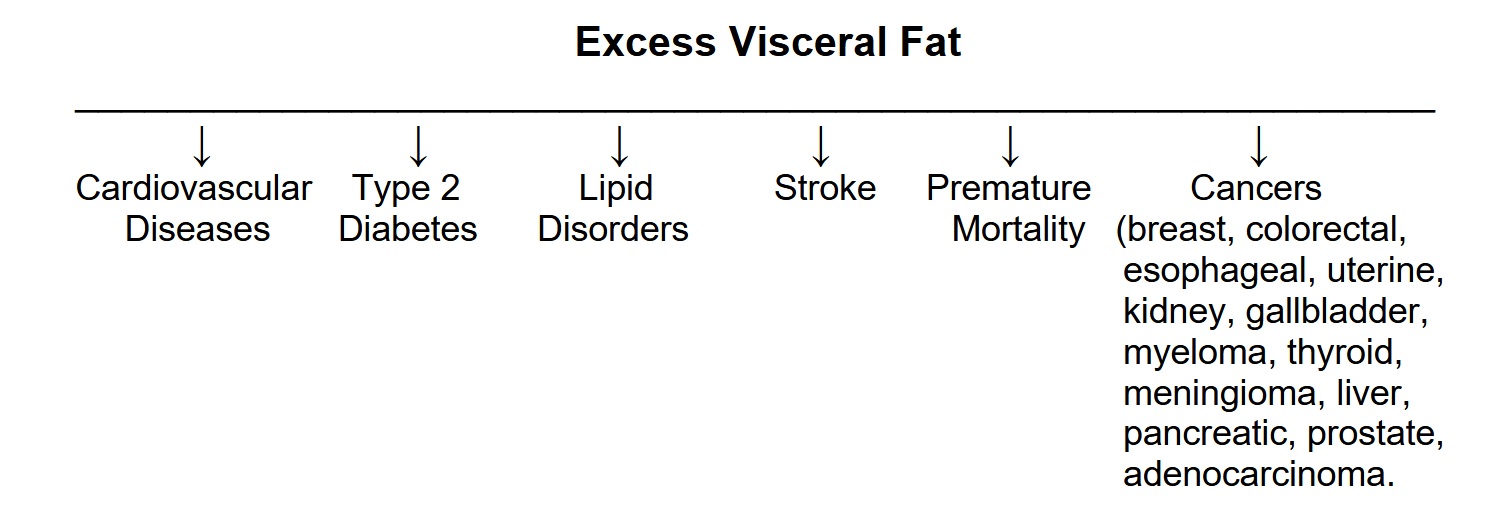
The reason why observational studies often cannot be taken as the final verdict on the role of excess visceral fat in the above and other disorders rests on the difficulty to reliably filter out the contribution of the often present confounding factors (quality of diet, exercise, smoking, alcohol consumption, sex and age differences, underlying often unrecognized health conditions, inaccurate patient reporting, etc.) influencing or even distorting the causality between excess visceral fat and the above disorders.
In an effort to obtain a cleaner relationship, or the absence of it, between excess visceral fat and the studied physiological disorder, our company developed a unique method which better satisfies this requirement. Essentially, the company’s research discovered that subcutaneously administered low doses of two human proteins (ZKPr1 and ZKPr2), when used for treatments of overweight or obese mice separately in the same experiment, both reduced excess visceral fat by 80-90% without statistically significantly reducing general obesity (i.e. body weight). In case of ZKPr1, such selective effect is due to its ability to inhibit fat transport to the fat storing tissues. Since in the visceral adipose tissue fat is metabolized faster than subcutaneous fat, the former fat store is the first to respond to the inhibition of fat transport. In case of ZKPr2, research to determine its mechanism of action is ongoing.